
The method
The heat ladder: one Sichuan dinner, every heat
辣度
Short answer: Cook one gentle pot with the fragrance but no chili heat. At the table, each person finishes their own bowl from a four-item tray: the chili oil or crisp you already own, ground roasted huajiao, black vinegar and scallion. Bowls run from 不辣 (no heat) to 特辣 (extra hot). Dishes with heat cooked into the base carry a floor.
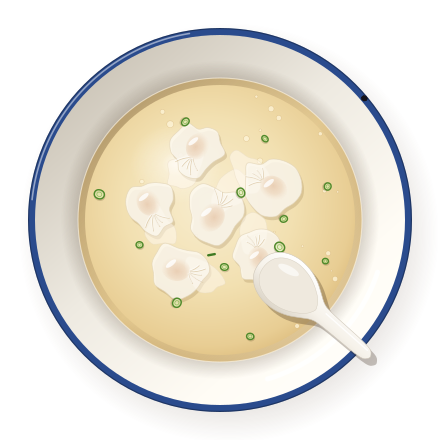
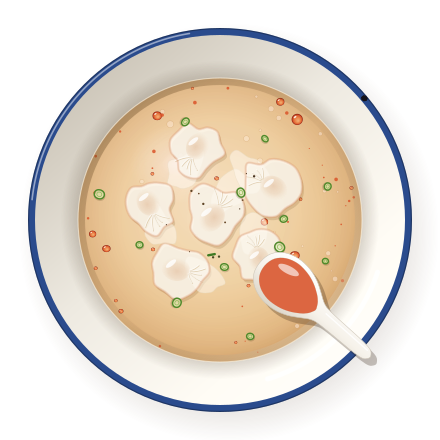
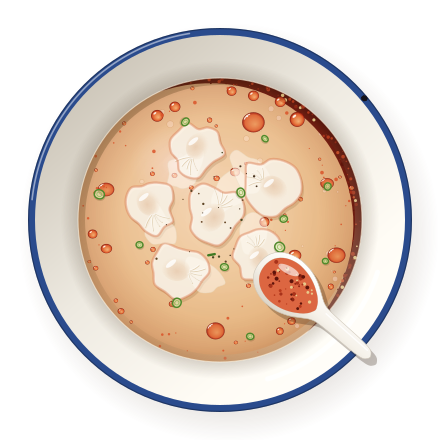
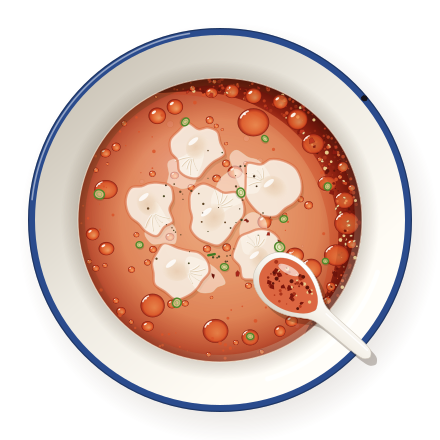
The gentle pot: fragrance in the base, heat in the bowl
Many everyday Sichuan dishes already work this way. Chengdu wonton shops serve the same wontons two ways: clear-soup wontons, 清汤抄手 (), in plain broth, and red-oil wontons, 红油抄手 (), dressed with chili oil, sweetened soy sauce, ground huajiao and garlic. The filling and the wrappers don’t change. The dressing does, and it is built in the bowl.
Dan dan noodles are layered the same way: sauce at the bottom of the bowl, then noodles and greens, then pork on top, with the diner mixing it all at the table. The Mala Market’s recipe divides the sauce among individual bowls, so each bowl can sit at its own heat.
So the pot carries what everyone shares: stock, ginger, scallion, garlic, soy sauce, sesame. The chili stays out of it. For dishes whose heat is a finish, the heat lives in the bowl.
The zero-prep tray
Four things go on the table, and none of them needs making tonight.
| On the tray | What it does in the bowl | Check on the label |
|---|---|---|
| The chili oil or chili crisp you already own, 红油 | Heat, colour and fragrance. Clear oil from the top is gentler; stirred with its sediment it is hotter. Chili oil vs chili crisp. | Storage: follow the label. Allergens vary: many crisps contain soy, and some contain peanut or sesame. |
| Ground roasted huajiao, 花椒面 | The tingle, 麻, and a citrusy fragrance. No chili heat of its own. | Freshness. Ground huajiao fades within weeks to a couple of months, so buy whole and grind small. How to toast and grind it. |
| Black vinegar, 香醋 | Brightness that makes a plain bowl taste finished. Every bowl gets a splash, including the no-heat one. | Wheat. Zhenjiang-style black vinegar is brewed from glutinous rice and may include wheat or wheat bran. Sichuan cooks traditionally prefer Baoning vinegar; either works here. |
| Sliced scallion, 葱花 | Freshness and a little bite, with no heat. | Slice it for the meal. Keep it on the tray, not stirred into the oil jar. |
The ordering words, and the 麻 pips
The ladder uses the words people already say at a Sichuan counter or hot pot table. China’s national broadcaster and The Paper both describe 微辣, 中辣 and 特辣 as the everyday heat levels, and both note that there is no shared standard behind them. A restaurant’s 微辣 in Chongqing can be hotter than another city’s 特辣. On the ladder, each word means a measured amount in one bowl, nothing more.
| Word | Literally | On the ladder |
|---|---|---|
| 不辣 | Not hot | The bowl as the pot made it, with vinegar and scallion. |
| 微辣 | Slightly hot | Clear chili oil, no sediment. |
| 中辣 | Medium hot | Chili oil with its sediment. |
| 特辣 | Especially hot | More oil and sediment, plus chili flakes. |
The tingle is a separate dial. 麻 () comes from Sichuan pepper, not chili. It is a buzzing numbness: a 2013 University College London study found that the pepper’s active compound sets off the touch-sensing nerves in the lips that respond to vibration. 麻辣 (), “numbing and hot”, is Sichuan pepper and chili together. So each bowl gets a heat word and a number of 麻 pips, from 不麻 (, no tingle) up to 特麻 (, full tingle). A bowl can be 不辣 with two pips, or 特辣 with none.
The house ladder, bowl by bowl
Amounts are for one bowl. Spoon from the jar into the bowl, not the other way round, and taste a mouthful before moving up a stop.
| Stop | Add to the bowl |
|---|---|
| 不辣 No heat | The bowl as the pot made it — a splash of black vinegar and scallion. |
| 微辣 A little heat | 1 tsp chili oil, oil only. |
| 中辣 Medium heat | 2 tsp chili oil with its sediment. |
| 特辣 Extra hot | 1 tbsp chili oil with sediment + ½ tsp chili flakes. |
麻 numbing, ground roasted huajiao per bowl: 不麻 — · 微麻 ⅛ tsp · 中麻 ¼ tsp · 特麻 ½ tsp
待试 Draft ratio — these amounts become final when we have cooked the house ladder at our table. See the kitchen log.
- Taste your jar first. Jars differ in heat and salt. A quarter teaspoon on plain rice tells you more than the label.
- Chili crisp seasons as it goes. Crisps are usually salted, so season the pot for the 不辣 bowl and let the jar add the rest.
- Some jars bring their own 麻. If yours lists Sichuan pepper, go easier on the ground huajiao in that bowl.
Set the whole table: choose a heat and a tingle for each person and get a tray plan. The Heat Card puts this ladder on one page; download the Heat Card free, no email needed.
Floors: which dishes can be finished at the table
Every dish is one of two kinds. Finishable dishes take their heat from red oil, huajiao or knife-edge chili added at the end, so the pot can stay at 不辣. Base-bound dishes build their heat into the base at the start, with fried dried chilies, chili bean paste or pickled chilies. That heat can’t be taken back out at the table, so the recipe prints the lowest stop it can honestly reach: its floor.
For dishes whose heat is a finish, the heat lives in the bowl. When it’s cooked into the base, we print the floor.
| Dish | Kind | Floor | Why |
|---|---|---|---|
| Wontons, 红油抄手 · 清汤抄手 | Finishable | 不辣 | Same wontons for everyone. The clear-soup bowl is 不辣; the red-oil bowl is built at the table. |
| Dan dan noodles, 担担面 | Finishable | 不辣 | The sauce is built in each bowl, so every bowl can sit at its own stop. |
| Tomato and egg, 西红柿炒鸡蛋 | Finishable | 不辣 | No chili in the pot. Chili oil at the table is a household habit, not a rule. |
| Smashed cucumber, 拍黄瓜 | Finishable | 不辣 | Dress a plain portion first, then add chili oil to the rest. |
| Mapo tofu, 麻婆豆腐 | Base-bound | 微辣 | The base is built on doubanjiang, which carries heat. For a no-heat bowl tonight, cook tomato and egg alongside. |
待试 Draft floors: these become final when each dish has been cooked and logged. See the kitchen log.
Can mapo tofu be made not spicy?
Not all the way. Mapo tofu starts by frying doubanjiang, the Pixian chili bean paste, in oil until the oil turns red, and chili is one of the paste’s main ingredients. Its heat is in the sauce before the tofu goes in. Restaurants run into the same wall: when a dish’s seasoning is mixed in advance, asking for 不辣 usually removes only the extra chili on top.
You can lower the floor, at a cost:
- Use less doubanjiang. Omnivore’s Cookbook cuts 3 tablespoons to 2 for a less salty, less spicy mapo. The sauce also loses savour and colour, because the paste carries both.
- Leave the extra chili out of the pot. Many recipes add chili powder or chili oil on top of the paste. RecipeTin Eats notes that the dish’s red oil comes from chilli powder. Leave those for the tray instead.
- Blend in a non-spicy bean paste. Just One Cookbook mixes non-spicy and spicy doubanjiang to keep the heat gentle, in a Japanese-style mapo that also adds miso. It tastes less like Sichuan mapo.
Each step moves the dish further from mapo tofu, and none reaches zero while there is chili bean paste in the base. That is why the house floor is 微辣. For a 不辣 bowl tonight, cook tomato and egg alongside: it has no chili in the pot, and it sits happily next to mapo on the same table. More on doubanjiang and its heat.
Taste the paste first
Base-bound dishes lean on salty jars, and jars are not equally salty. A 2020 study of eight Pixian doubanjiang brands bought in Pidu measured salt from about 14% to about 20% by weight. So before any paste goes in the pot, taste a dab from the spoon, start with two-thirds of the recipe’s amount, hold back the soy sauce, and add the rest only after tasting. Why two-thirds.
The upgrade path: homemade red oil and knife-edge chili
The tray works with the jar you already own. Two homemade additions can take its place on nights you want them:
- Homemade red oil, 红油. Hot oil poured over Sichuan chili flakes, often in two or three pours at falling temperatures: the hottest for fragrance, the cooler ones for colour. Which oil to use, and how to pour it safely.
- Knife-edge chili, 刀口辣椒 (). Dried chilies and Sichuan pepper toasted slowly in a little oil until crisp, cooled, then chopped with a knife, which is where the name comes from. It brings both heat and 麻 in one spoonful.
One table, every bowl
The point of the ladder is a single dinner that everyone at the table eats, with each bowl finished the way its eater likes it. Set the whole table, or print the Heat Card for the fridge door.
Heat is a table preference. Questions about a child and spicy food belong with your pediatrician.
Sources
- Sohu — Long Chaoshou: red-oil and clear-soup wontons compared (in Chinese)
- CNCN Chengdu food guide — Clear-soup wontons, method (in Chinese)
- Chengdu Economic Daily — Chaoshou and wontons, red and clear (in Chinese)
- The Mala Market — Sichuan Chili Oil Wontons (Hongyou Chaoshou)
- The Woks of Life — Sichuan Spicy Wontons
- The Mala Market — Sichuan Dan Dan Mian (sauce layered in each bowl)
- The Woks of Life — Dan Dan Noodles
- China National Radio — Sichuan Hot Pot Association responds on a unified heat standard (in Chinese), May 2023
- The Paper — Is a unified hot pot heat standard necessary? (in Chinese), May 2023
- Sohu — Chongqing and Sichuan hot pot compared: Chongqing 微辣 and Chengdu 特辣 (in Chinese)
- Miaozi — The bu la vs wei la trap: why pre-mixed sauces stay spicy
- First Trip China — How to order Chongqing hot pot (heat levels and the split pot)
- ScienceDaily, from University College London — Tingling sensation caused by Asian spice (2013)
- Wikipedia — Sichuan pepper
- The Mala Market — Hongyou wei, the red-oil flavour
- The Mala Market — Da Hong Pao Sichuan Pepper (how long ground huajiao keeps its punch)
- Wei Guo, Red House Spice — Sichuan Pepper: Your Questions Answered
- The Woks of Life — Chinese Black Vinegar
- Fuchsia Dunlop — A note on substitutions (Chinkiang and Baoning vinegar)
- Wikipedia — Chinkiang vinegar
- The Mala Market — Sourcing Pixian Doubanjiang
- The Woks of Life — La Doubanjiang (Spicy Bean Sauce)
- i am a food blog — Mapo tofu (frying the paste to release its red oil)
- Omnivore’s Cookbook — Authentic Mapo Tofu (less doubanjiang for less salt and heat)
- RecipeTin Eats — Mapo Tofu (where the red oil comes from)
- Just One Cookbook — Mapo Tofu (blending non-spicy and spicy doubanjiang)
- The Woks of Life — Chinese Tomato Egg Stir-fry
- China Sichuan Food — Smashed Cucumber Salad (a milder version without chili oil)
- Fan Zhiyi et al. — Quality characteristics of commercial Pixian broad bean-chili pastes, Food and Fermentation Industries 46(13), 2020 (in Chinese)
- The Mala Market — Sichuan Chili Oil Recipe ft. Caiziyou (pouring in stages)
- The Woks of Life — How to Make Chili Oil
- Sohu — How knife-edge chili is made, and where the name comes from (in Chinese)
- Coya Lunch — Knife-edge chili, a Sichuan seasoning (in Chinese)
- Impact of omitting Pixian doubanjiang, daokou lajiao and oil splashing on water-boiled beef (PubMed Central, 2025)
- Oregon State University Extension — Herbs and vegetables in oil (SP 50-701, revised January 2025)
- University of Georgia Extension — How to Safely Make Infused Oils (C1334, 2024)
- Yuiitsu — a widely sold spicy chili crisp (ingredient list)
- Pearl River Mart — a widely sold Sichuan chili crisp (ingredient list)
- Longdan — peanuts in chilli oil (allergen line)
- Wei-Chuan — Wonton Wrapper (allergens: wheat, egg)
- Twin Marquis — Shanghai Style Wonton Wrapper (wheat; no egg)
- U.S. Food and Drug Administration — Food Allergies